
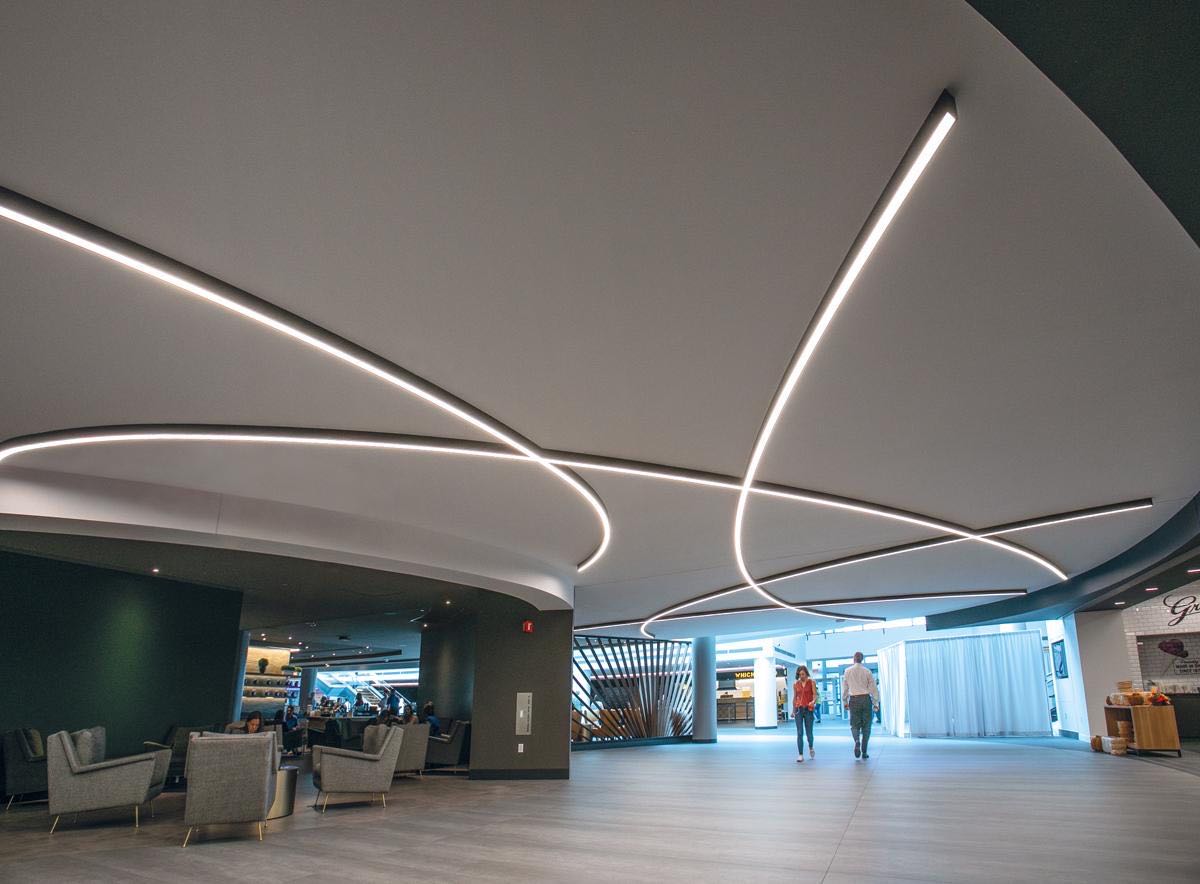
When assessing the advantages of linear lighting, we are looking at a solution that effectively balances efficiency, visual comfort, and architectural integration.
When correctly specified, linear systems deliver both high aesthetic value and strong functional performance, making them well suited to contemporary interior and commercial environments.
Linear lighting offers a high degree of creative freedom
The ability to form continuous lines, curves, arcs, and bespoke geometries allows the lighting to become an integral part of the architectural language rather than a purely functional element.
These systems can be discreetly integrated into ceilings, walls, joinery, and feature details, enhancing spatial definition while maintaining a clean and cohesive visual appearance.
Beyond the Traditional
Modern linear LED luminaires move beyond the limitations of traditional, point-source lighting. They introduce a refined visual quality that contributes to the overall character of a space, providing a level of design flexibility and elegance that conventional fittings cannot achieve. When well executed, linear lighting naturally draws the eye and establishes a strong visual hierarchy within the environment.
In terms of performance, linear lighting provides consistent, evenly distributed illumination with minimal shadowing. This uniformity improves visual comfort and reduces eye strain, which is particularly important in workplaces, retail settings, and other task-oriented environments.
Their adaptable form factor allows them to be specified across a wide range of applications while maintaining controlled light levels and visual clarity.
Improved Light Distribution
Ultimately, the improved light distribution and reduced glare associated with linear systems enhance task efficiency and user comfort, supporting both productivity and spatial quality.