
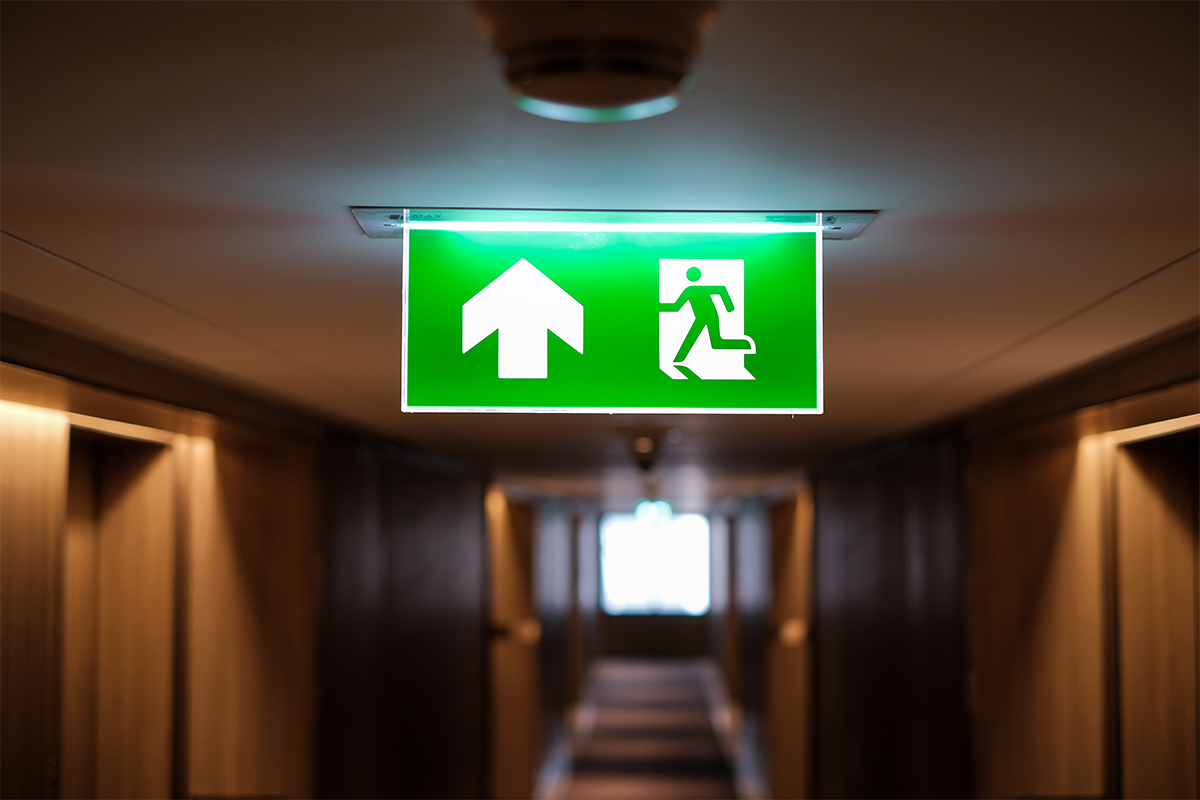
Emergency lighting is one of the most critical and often overlooked aspects of any building’s safety system. When mains power fails, it’s this lighting that ensures safe evacuation, clear visibility, and compliance with legal standards. Yet, despite its importance, emergency lighting is frequently installed or maintained incorrectly.
At Lamp Source Project Solutions, we regularly support clients who need help bringing their systems up to standard. Here, we explore some of the most common pitfalls to avoid when specifying, installing, and maintaining emergency lighting.
1. Treating Compliance as a Box-Ticking Exercise
One of the biggest mistakes is assuming that compliance ends once fittings are installed. In reality, compliance is an ongoing responsibility.
The UK’s Emergency Lighting Regulations (as outlined in BS 5266-1) require systems to be tested, documented, and maintained regularly. (GOV.UK – Fire Safety Guidance)
Without regular checks or accurate record-keeping, even a compliant system at installation can quickly fall out of spec. Our Emergency Lighting Solutions include automated self-test and reporting systems designed to make compliance effortless, ensuring you meet obligations year-round.
2. Choosing the Wrong Type of Fittings
Not all emergency lighting is the same. From maintained fittings (that stay on during normal operation) to non-maintained fittings (that only illuminate during power failure), each has a distinct role.
A common pitfall is using a one-size-fits-all approach, for example, installing bulkheads where exit signage or escape route luminaires are required.
This not only compromises safety but can also invalidate certification.
At Lamp Source Project Solutions, we help consultants and contractors choose the right fittings for each environment, whether it’s downlights, exit signs, or blade-style luminaires.
3. Poor Placement and Spacing
Even the best luminaire won’t perform if it’s installed in the wrong place. Corridor corners, staircases, and high-risk task areas all require precise light levels and spacing to meet standards.
The Institution of Lighting Professionals (ILP) recommends detailed design calculations before installation, something we provide through our in-house lighting design service to ensure full compliance and optimal coverage.
Poorly positioned fittings can leave dark spots or fail to provide the minimum lux levels required for safe evacuation, issues that often go unnoticed until testing.
4. Neglecting Routine Testing and Maintenance
Emergency lighting must be tested monthly and annually to comply with BS 5266. Manual testing is time-consuming and prone to error, one missed inspection could put an entire site at risk.
Automated self-test emergency lighting systems simplify this process, providing real-time reporting and peace of mind.
You can read more about our Aftercare & Maintenance Support and how we help clients maintain system reliability over the long term.
5. Ignoring Integration and Energy Efficiency
Emergency lighting shouldn’t be an isolated system. Integrating it into your wider lighting controls network, through DALI, Bluetooth, or smart building management systems, improves reliability and reduces manual work.
It also supports sustainability goals by ensuring fittings operate efficiently during normal use.
Our team specialises in Lighting Control Systems that seamlessly combine emergency lighting with smart monitoring and reporting tools.
Lighting Safety Done Right
A reliable emergency lighting system isn’t just a legal requirement, it’s a fundamental part of your building’s safety and operational resilience. By understanding these common pitfalls and taking a proactive, integrated approach, you can ensure full compliance and peace of mind.
If you’d like expert guidance or a system health check, get in touch with our team through our Contact page. We’ll help you design, install, and maintain emergency lighting that works when it matters most.